Also called: bridge painting, weathering steel, metallising, duplex coating
How it is done
- Classify the environment (ISO 9223 / ISO 12944-2 corrosivity C1–CX) and the durability required, then choose a paint system, metallising with sealer and topcoat (duplex), hot-dip galvanizing for smaller members, or uncoated weathering steel.
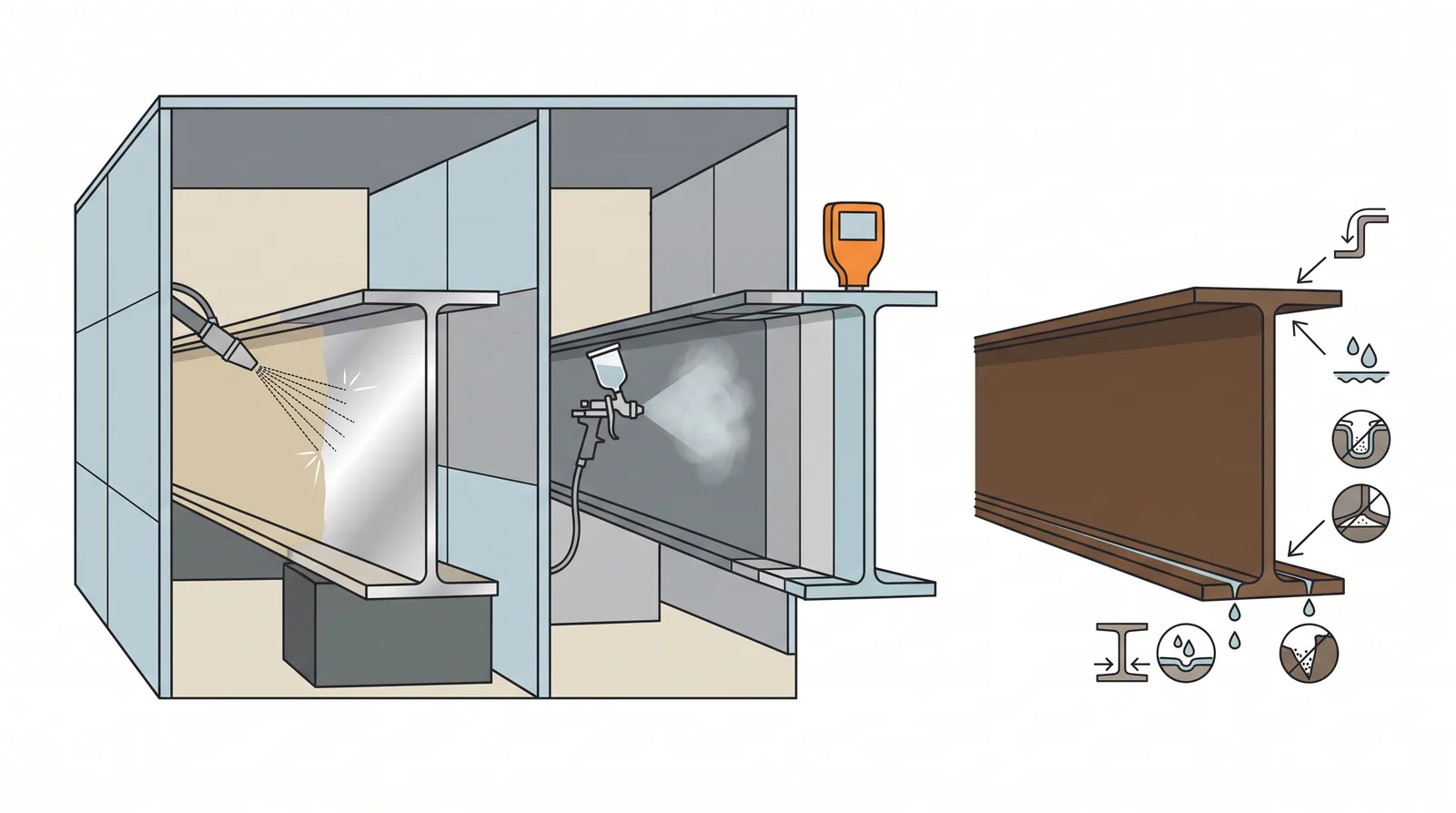
- Shop surface preparation: remove soluble salts and contaminants, blast to Sa 2½ with the specified profile, and work within humidity and dew-point limits.
- Apply the shop system in a controlled environment: zinc-rich primer, epoxy intermediate, polyurethane or polysiloxane finish, measuring dry film thickness coat by coat; mask the faying surfaces of slip-critical joints or use a primer qualified for the slip class.
- Weathering steel: detail out water and debris traps, seal or drain expansion joints, keep the steel out of salt spray and continuous wetness, and protect substructure concrete from run-off staining in the early years.
- Protect coated steel in transport and erection (padded slings, designated lifting points) and record damage.
- After erection, clean and coat the splices and touch up damage with compatible materials under the same humidity and temperature limits.
- Inspect at handover (DFT, adhesion and holiday tests where specified) and set the maintenance cycle: periodic inspection, spot repair, and full recoating when breakdown reaches the specified level.
Key numbers
- Blast cleaningSa 2½ (ISO 8501-1), profile typically 50–100 µm
- High-durability paint system for C4–C5total DFT about 240–360 µm in three coats
- Thermal spray zinc or zinc-aluminiumabout 100–250 µm, sealed and topcoated in marine exposure
- ISO 12944 durability classeslow up to 7 years, medium 7–15, high 15–25, very high over 25 years to first major maintenance
- Weathering steelcorrosion allowance commonly 1–1.5 mm per exposed face for a 120-year life (UK practice)
- Shop coatingUSD 40–80 per m² (indicative); bridge girders carry roughly 10–25 m² of surface per tonne
Where it fits
- All steel bridges; weathering steel for rural dry climates; metallising for marine sites.
Where it does not
- Weathering steel in the Gulf splash zone or under leaking joints; site-only coating of large areas.
Choosing it
- Choose uncoated weathering steel where the site lets the patina dry out and stay free of salt (inland, well drained, no de-icing spray onto the steel); it takes repainting out of the life cycle.
- Prefer a high-durability paint or duplex system in marine, coastal (including the Gulf), industrial or de-icing salt environments, and under leaking joints.
- Prefer metallising with a sealer for C5 and CX exposure or where first maintenance must be beyond 25 years.
- Weigh access cost: where repainting needs traffic closures, rail possessions or containment over water, pay more for a longer-life first system.
Plant, pace and money
Risks and controls
What goes wrong
- Coating failure at edges and splices, patina not forming in humid marine air, salt contamination under the coating.
Quality assurance
Blast profile and salt tests, dry film thickness, holiday tests, inspection at handover.
Origins
US Steel introduced Cor-Ten weathering steel in 1933 and it entered bridge use in the US in the 1960s. Bridge paints moved from lead-based systems to zinc-rich primers with epoxy and polyurethane topcoats from the 1970s and 1980s as lead was phased out.
Examples
Korean coastal steel bridges are metallised; US rural steel bridges use weathering steel; the game's marine-grade durability option includes coatings.
Case studies
Related methods
Further reading
ISO 12944 · AASHTO/NSBA Guide Specification for Coatings · FHWA weathering steel guidance · ISO 9223 Corrosivity of atmospheres · ISO 8501-1 Preparation of steel substrates before application of paints · FHWA Technical Advisory T 5140.22, Uncoated Weathering Steel in Structures